
Six Nations 2026: Who's Rising, Who's Reeling?
MATTHEW PARKE
The 2026 Six Nations will kick off in early February, and the rugby giants of Europe have now all released their squads for the upcoming tournament, with some massive absentees of superstar players. Already familiar questions are being raised as to who is rising, or falling, who is going to cause an upset, who are the dark horses?
With the Rugby World Cup being next year, this is the time for the northern hemispheres’ finest to strengthen and build depth, to hone their tactics and skills, and force the rugby world to take notice of their nation,
Whilst teams are changing and adapting, what remains the same is the drama, the glory, the brutal contests and edge-of-the-seat moments that brings together the supporters of six proud nations to decide who the best amongst them is.

BBC Sport
FRANCE
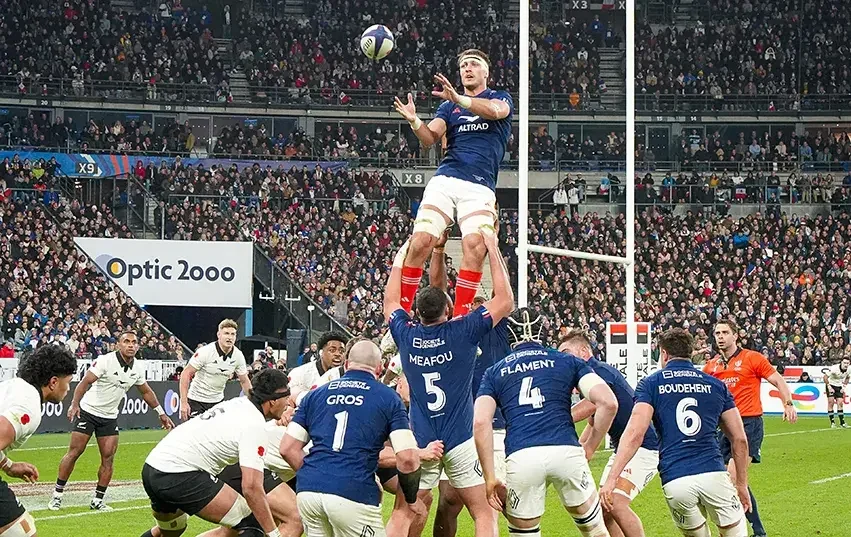
The favourites of the tournament, and defending champions, France are coming off a mixed bag of year in 2025. Having won the 2025 Six Nations, scoring 30 tries, breaking England’s record of 29 tries scored in a single edition of the tournament, and only narrowly losing to England to prevent a Grand Slam, France would go on to be comfortably beaten in each of their games against the All Blacks in their summer tour of New Zealand. They would also lose comfortably to South Africa at home in the Autumn Nations Series, but finished the year with victories over Fiji and Australia.
StadeFrance
Fabian Galthie, having built so much momentum and depth in this French team over the last few years, has a vision for France as a dominant rugby superpower able to compete with the rugby giants, therefore France must improve upon last year’s performances against top opposition, and beginning the year with yet another Six Nations title would be an ideal start for their 2026.
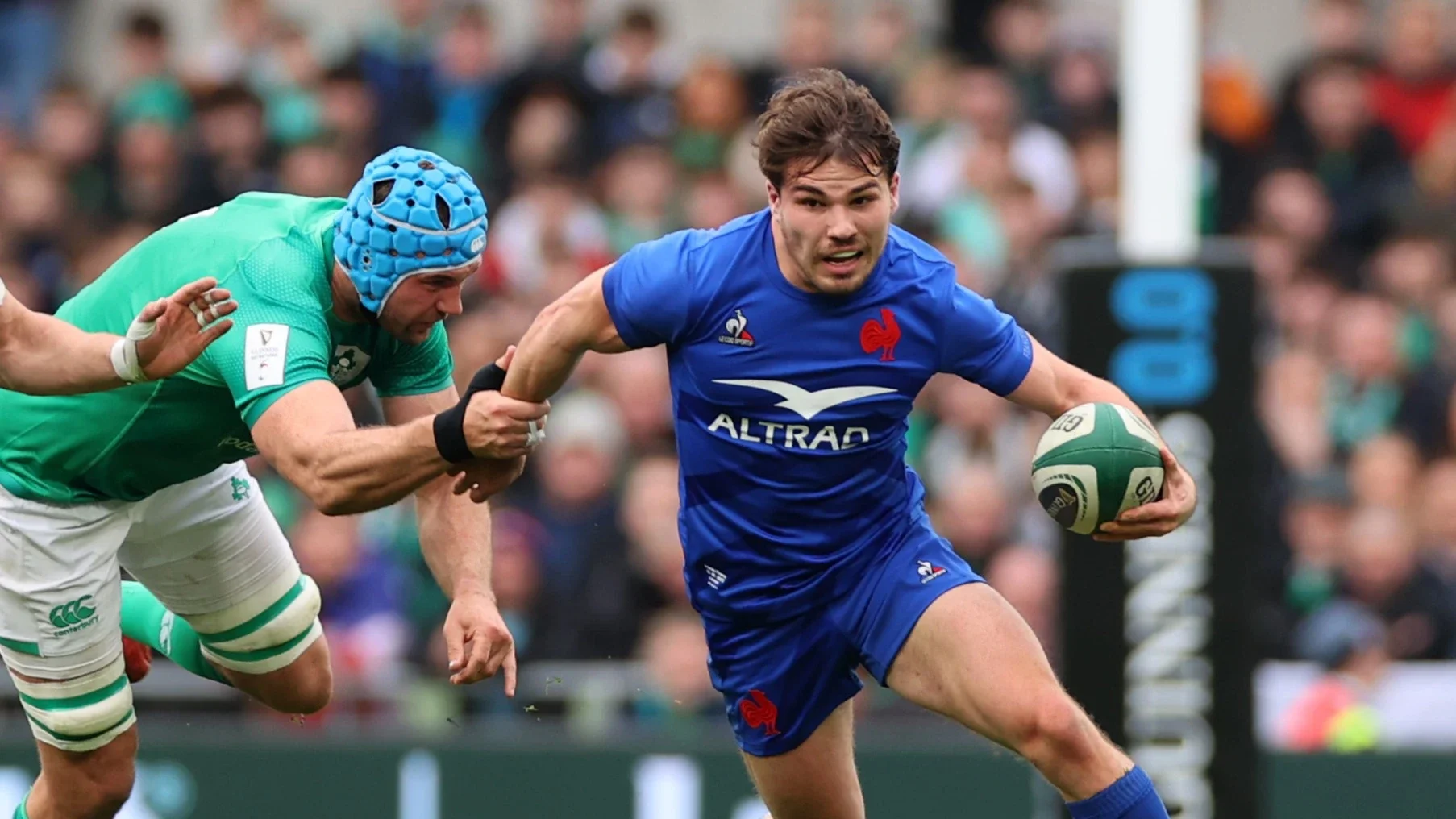
Talisman scrum-half Antoine Dupont being side-lined since March 2025 following an injury in France’s Six Nations victory over Ireland, is now fit and ready to display his rugby wizardry to the world once more. However, his Toulouse half-back partner Romain Ntamack is out with injury, with Les Bleus’ no. 10 jersey likely been given to Bordeaux’s Mattheiu Jalibert.
Most shocking about Galthie’s selection is the absence of key players Gregory Alldritt, Gael Fickou, and leading French national try-scorer Damian Penaud. This displays a tactical shift, with Galthie looking in to incorporate more youth into the side. The absence of Alldritt frees up the back-row for up-and-coming players like Mickael Guillard and Oscar Jegou to demonstrate their ability in the blue jersey. 23-year-old Nicolas Depoortere will likely slot into the no. 13 jersey instead of Fickou, whilst the rising and exciting. Theo Attisogbe will start on the wing for France.
The changes to the backline give away that France are likely going to focus on a strong kicking game in order to breakdown teams in the tournament. Dupont, Ramos and Jalibert are all exceptional and tactical kickers. Both Attisogbe and Depoortere, not to mention Louis Bielle-Biarrey possess heaps of pace, perfect to chasing and covering kicks. Penaud, despite his accolades, was never an exceptional kick chaser, whereas Attisogbe, having played a lot of fullback, as well as wing, is exceptional under a high ball, likely explaining why he is favoured by Galthie for the time being.
Whilst of course France will seek to dominate the Six Nations, these tactical shifts, reshuffling and depth building is all part of France’s long term plan following their quarter final exit in their home World Cup in 2023: winning the 2027 Rugby World Cup.
ENGLAND
The Guardian
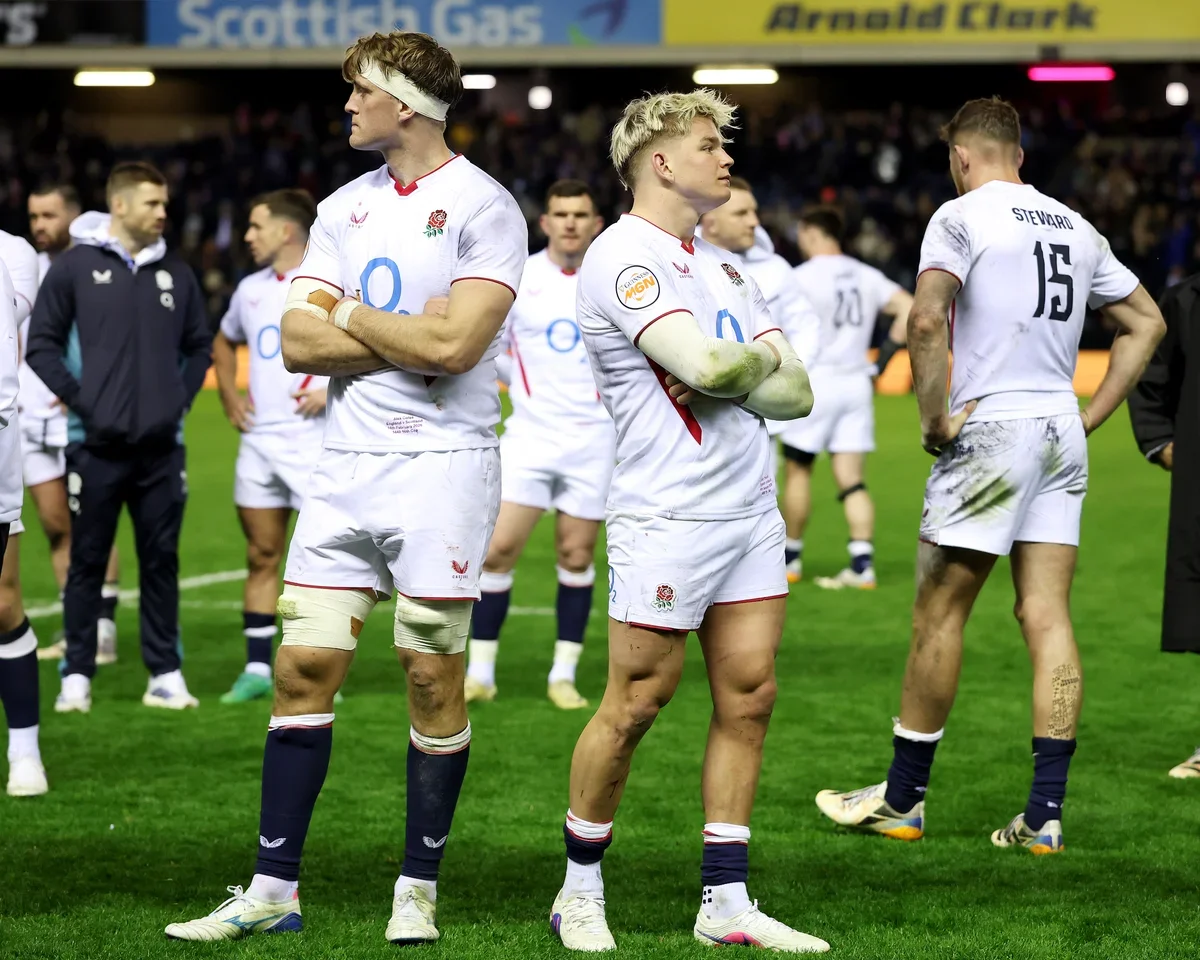
England are coming off the back of a very prosperous 2025. Having come second in last year’s Six Nations tournament and having beaten the eventual winners in France, Steve Borthwick’s men are shaping to take the championship for themselves this year. England only lost one game in the entire calendar year of 2025, that being to Ireland in the opening round of the Six Nations. They had a successful summer tour of the Americas, besting Argentina twice and the USA, before winning all of their Autumn Nations Series fixtures, including a very impressive win over the All Blacks.
England under Borthwick have been slowing developing, introducing a wealth of talented youth into the side, whilst being complemented by more experienced players. Henry Pollock is obviously the standout. At just 21 years-old his brazen, hybrid forward-back style of play and knack for winding up his opposition has caught the attention of fans around the world, whether they love him, or cannot wait to see him get smashed in contact. There is also other rising prospects such Immanuel Feyi-Waboso, Tommy Freeman, Henry Arundell, Guy Pepper, Chandler Cunningham-South etc. The youth in this side is exceptional and guarantees that England are on the rise once more as these players progress.
England favour a 6-2 bench split, allowing them to keep forward intensity for the full 80 minutes. A strong set piece held down by the likes of Captain Maro Itoje, Jamie George, and Ellis Genge is key to Borthwick’s style to allow England to play the expansive and high-paced style of rugby they have shown recently. Pair this with a backline led by Alex Mitchell and George Ford and his kicking mastery, and England may very well get their hands on the Six Nations trophy once again.
IRELAND
Ireland had, by recent standards, a bit of a disappointing 2025, with some highlights. They placed third in the Six Nations, being hammered by France at home in the penultimate round of the tournament. In the summer they won both their matches against tier two nations in Portugal and Georgia and in the Autumn Nation Series they beat Japan and Australia, (however the former looked unconvincing despite the 41-10 score) but get outclassed by the All Blacks and their set-piece was obliterated by the Springboks, teams that Ireland has had an impressive record against in recent years and, like France, that Ireland wishes to contend with. Combining recent losses with the ongoing no. 10 selection headache, as well as numerous injuries, media outlets are claiming that Ireland is in crisis or on a downwards trajectory.
Six Nations Rugby
Ireland are in a transitional stage as most of their experienced players are getting older, with more youth needing to be injected into the squad as Andy Farrell builds towards the next world cup. Going into this Six Nations, Ireland are faced with a lot of injuries particularly at loosehead prop, with Andrew Porter, Paddy McCarthy and Jack Boyle all suffering from injuries. Elsewhere on the pitch, Mack Hansen, Hugo Keenan, Robbie Henshaw and Ryan Baird are also unavailable through injury. Bundee Aki is also banned for four games after giving abuse to match officials during a Connacht vs. Leinster match.
That is a lot of stable figures for any team to be missing, but it’s not all doom and gloom as some pundits might suggest. Instead this could be an opportunity to bring some youth into the squad. 20-year-old Connacht prop Billy Bohan has been called up to steady the woes at loosehead, whilst Ulster’s 23-year-old Jude Postlethwaite has been called up to replace Bundee Aki. Cain Prendergast can get some game
team in the back-row whilst Baird is injured, and Jamie Osbourne can fill in at fullback in place of Keenan, having already shown some impressive performances in a green jersey. 23-year-old Munster lock and very exciting physical prospect, Edwin Edogbo is also one of two uncapped players named in the squad, the other being 24-year-old scrum-half, Nathan Doak who has been very impressive for Ulster this season. If these players are given the opportunity it could really benefit Ireland long-term.
As for the 10 jersey, Ireland have two young 10s with very high potential if they are developed correctly. Crowley should start, as the older, more experienced player and has proven he can be a test level player having shown his ability following Johnny Sexton’s retirement in the 2024 Six Nations. This will give Sam Prendergast (who is still only 21) time to develop his decision making and defensive capabilities. Harry Bryne’s recent resurgence at Leinster can also only be good for Sam’s development providing him with selection competition at the provincial level. Whilst Sam has had some solid performances in green, he is not at the level yet to be competing against top competition. His selection in the starting XV is throwing him in the deep end and recently has shown to affected Crowley’s confidence who has been struggling lately to replicate his Munster form at test level. Continuing in this way will only be a detriment to both players.
With these points in mind, Ireland must also consider their tendency to peak in between world cups. They have not done so yet this time; in fact their rebuilding phase is now in the run-up to the 2027 RWC. With two Six Nations and the inaugural Nations Championship competition between now and next world cup, it is ample time for Ireland to build solid depth and a new tactical identity, and not just to roll out the youth against weaker sides as Farrell has done previously but give them chances in big games to prove themselves.
SCOTLAND
Scotland are always seen as dark horses for an upset in one of the tournaments fixtures. They are competitive in most games but have never really been genuine title contenders. Recently they have impressive records over home nation rivals England and Wales and will look to continue that record this year but are not set up to muster a real title push.
In the previous year they lost to Fiji in the summer but managed to overrun both Samoa and the USA, beating the latter 85-0. In the Autumn Nations they beat Tonga 56-0, but lost to Argentina at home 33-24 after being 21-0 up to around the 55 th minute, and despite a spirited showing against the All Blacks, they ultimately came up short once again. Gregor Townsend’s side is very inconsistent and struggles to see games out for the full 80.
Radio Times
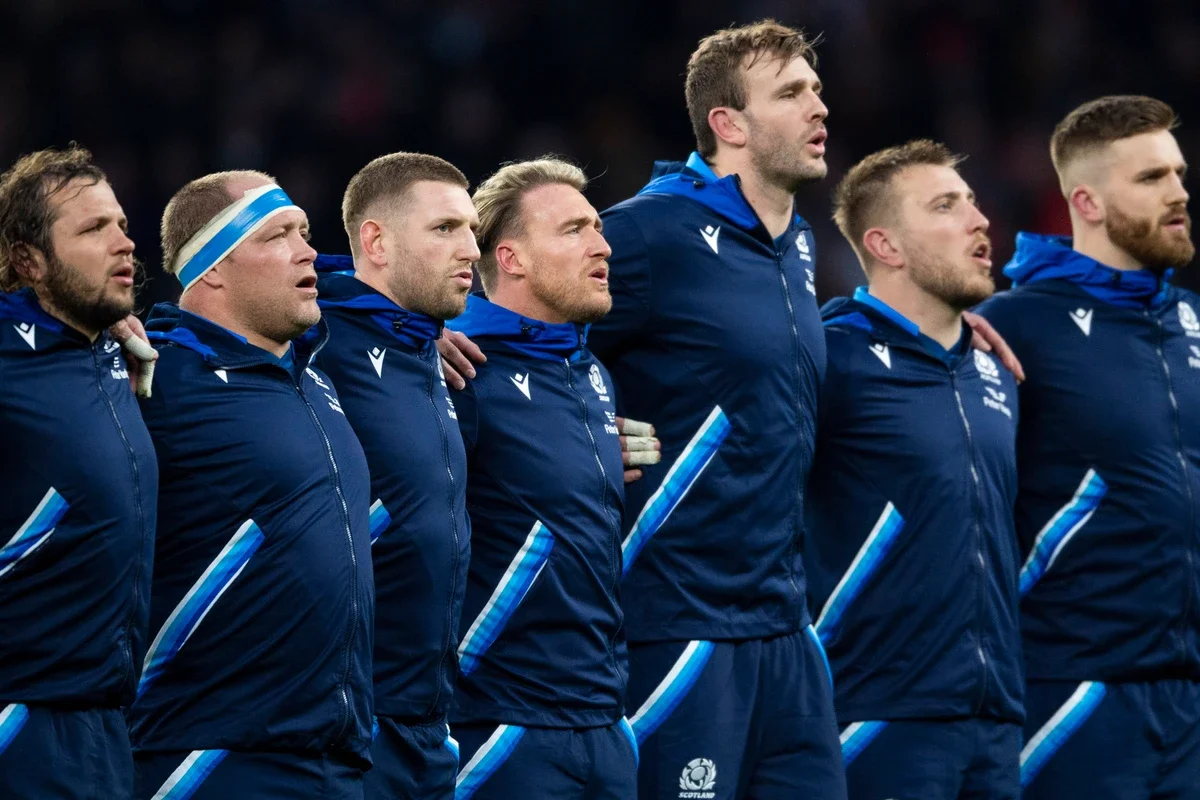
Scotland have an elite backline. Finn Russell is arguably the best 10 in the competition, the centre pairing of Huwipolutu is one of the best, and most well-gelled partnerships in the world, they have elite wingers in Darcy Graham, Duhan Van der Merwe, Kyle Steyn and a world class fullback in Blair Kinghorn. Yet statistics show that Scotland struggle to make real gain-line success, and when they are in scoring positions they often fail to turn territory into points. This would suggest a lack of size and depth in the forward back, hindering Scotland’s chances of physically imposing on other teams to allow their backs to play more expansively.
On a positive note, the Glasgow Warriors currently sit atop the URC table, showing their strength at club level. Edinburgh on the other hand are in 13 th place. Only having two home-grown teams limits Scotland’s player pool and ability to create strong depth.
All this combined means Townsend is under real pressure. Scotland’s best case scenario is to aim for a third place finish. They have recent impressive records over England and Wales so winning the Calcutta and Doddy Weir Cups will be vital to their campaign. Scotland will also want to beat Italy in Rome this year having failed to do so in the 2024 campaign, and perhaps even attempt to upset the currently burdened Ireland. In their current state of inconsistency, wins over England and Ireland will be a challenge, whilst Italy will look to continue their upward trajectory by taking a Scottish scalp at home, the same to be said for Wales as they look to prevent their own crisis.
ITALY
Koobit
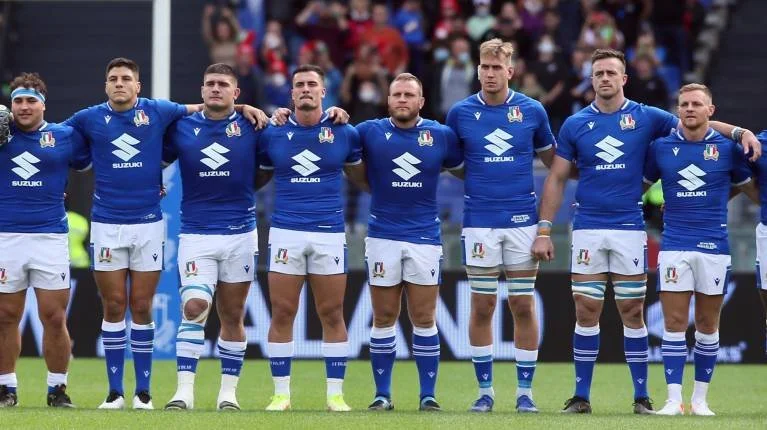
Under head coach Gonzalo Quesada who took charge in January 2024, Italy have shown rapid improvement from simply being the annual wooden spoon winners. Over the past few years they have created many shock upsets (such as against Australia last year) against higher ranked opposition and will look to continue their upward trajectory this tournament.
Like Scotland, Italy possess a strong backline steered by half-backs Alessandro Fusco and Paolo Garbisi, with Tommaso Menoncello and Juan Ignacio Brex providing strike power from the centre of the pitch, and a backline loaded with pace feature Monty Ioane, Louis Lynagh, Leonardo Marin, Lorenzo Pani and Eduardo Todaro. Todaro is one to particularly watch out for this tournament. At just 19 years- old, he has scored 10 tries in 13 matches helping Northampton Saints to top the Gallagher Premiership table so far this season.
Where Italy struggles is in their forward pack. Whilst being led by captain and exceptional back-rower, Michele Lamaro, the Italian pack often lacks the power to compete with higher opposition and their set-piece is not as compact as others. Depth is also an issue especially in the forwards which is needed in order to compete in championships. Italy are also missing key stars Ange Capuozzo, Sebastian Negri and Tommaso Allan through injury.
Despite these setbacks Italy have a good chance to cause more upsets this tournament. Having beaten Italy in 3 of the last 4 tournaments and with Wales in a vulnerable state, Italy will look to continue their recent impressive record against the Welsh. The opening game against Scotland in Rome provides a great chance for Italy to start the campaign strong and continue to prove they are a rising force in rugby, not just plucky underdogs.
WALES
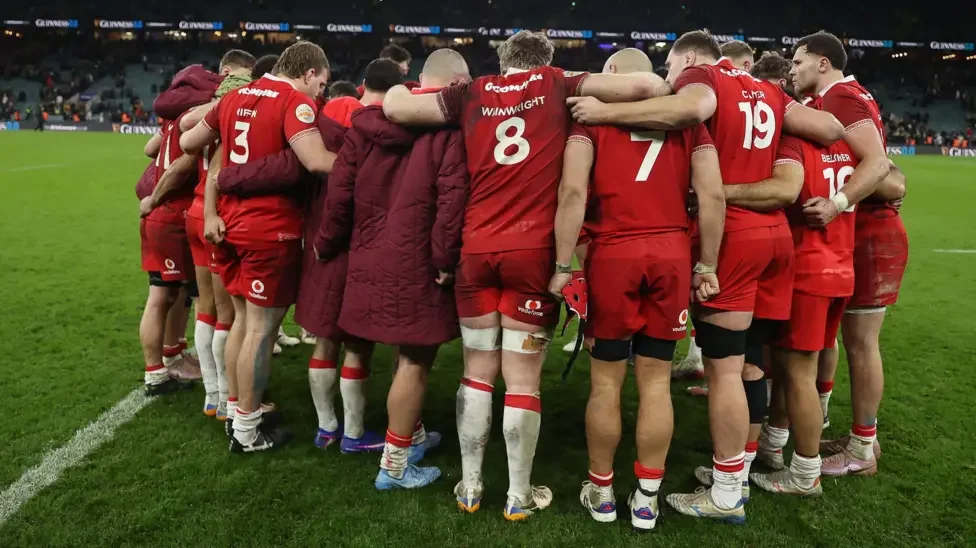
In Wales’ current state, they do not enter this championship as contender; they are a team looking to stabilise. They only managed two wins last year, both against Japan, but neither of them convincing, and in their other fixtures they were usually blown off the park, including a historic and humiliating 73-0 home loss to South Africa to round out their 2025.
At club level, Welsh teams are financial drained, with the threat of a franchise being axed ever looming over Welsh rugby. It is a challenging time both on and off the field for Wales with the WRU in shambles and clubs scrambling to ensure they stay afloat.
BBC Sport
So how does recently appointed head coach, Steve Tandy stabilise the national side amidst all this chaos? Whilst there is a little he can do to help alleviate the club crisis at Wales, he can build his team around a few key players. Jac Morgan is the standout of this Welsh side but he is currently out with a shoulder injury. Instead Tandy should focus on players like Dafydd Jenkins, Dewi Lake, Tomos Williams, Blair Murray, Dan Edwards and prodigal Welsh son Louis Rees-Zammit. There is still legitimate talent within Wales that can be dangerous to opposition.
The set-piece and discipline are other major concerns that need to be rectified. It is impossible for a team to build anything with a weak set-piece, and discipline will continue to allow teams to run over Wales being awarded easy penalties and territory. In Steve Tandy’s first 5 games in charge of Wales, they have conceded 65 penalties, 10 yellow cards and 1 red card. This needs to be addressed immediately if Wales hope to build anything.
Tactically, Wales need structure. Strong defensive performances instead of conceding 5+ tries every game, along with a meaningful kicking strategy that utilises the pace in their backline will help them to better control territory rather than get run over time and again. Attempting flair against sides like England and France is only going to be punished with those teams being stronger at the breakdown.
Wales are fighting to not get the wooden spoon once again. Ideally they might get a win over Italy and perhaps an upset against Scotland in the Principality Stadium but this will require real grit and determination, and to not let discipline slip in critical moments. Wales are not going into this tournament expecting to win, only to build a base for upwards trajectory.