
Ireland’s Autumn Nations’ Series Campaign 2025: What to make of Ireland going forward?
Matthew Parke
Ireland have just rounded off a divisive Autumn Nations Series campaign, which has raised questions over the future for the men in green. Ireland finished the series 2–2, having beaten Japan and Australia but were outrun by the All Blacks and the Springboks, teams that Ireland want to keep pace with, having created strong rivalries with both the southern hemisphere giants. Ireland did manage to secure a spot in the top band for the World Cup draw, having not fallen below the top six in World Rugby’s rankings, but questions are now being asked of this team’s future.
In the opening fixture, Ireland faced the All Blacks in Chicago in a Gallagher Cup rematch from 2016. Ireland started the game strong before Tadhg Beirne was controversially sent off with a yellow for a bunker review, which was then upgraded to a 20-minute red card. Despite the adversity, Ireland went into the break three points ahead thanks to a Crowley penalty, who also slotted another penalty to take Ireland to a six-point lead around the hour mark. However, New Zealand would cross the Irish line three times in the final 15 minutes of the game to seal victory at Soldier Field.
Ireland would follow this loss with a 41–10 win over Japan in Dublin but, despite the scoreline, only really looked convincing in the final moments of the game. When asked if this was the response he wanted from his players following the Chicago defeat, head coach Andy Farrell simply, yet definitely, stated, ‘In short, no’.
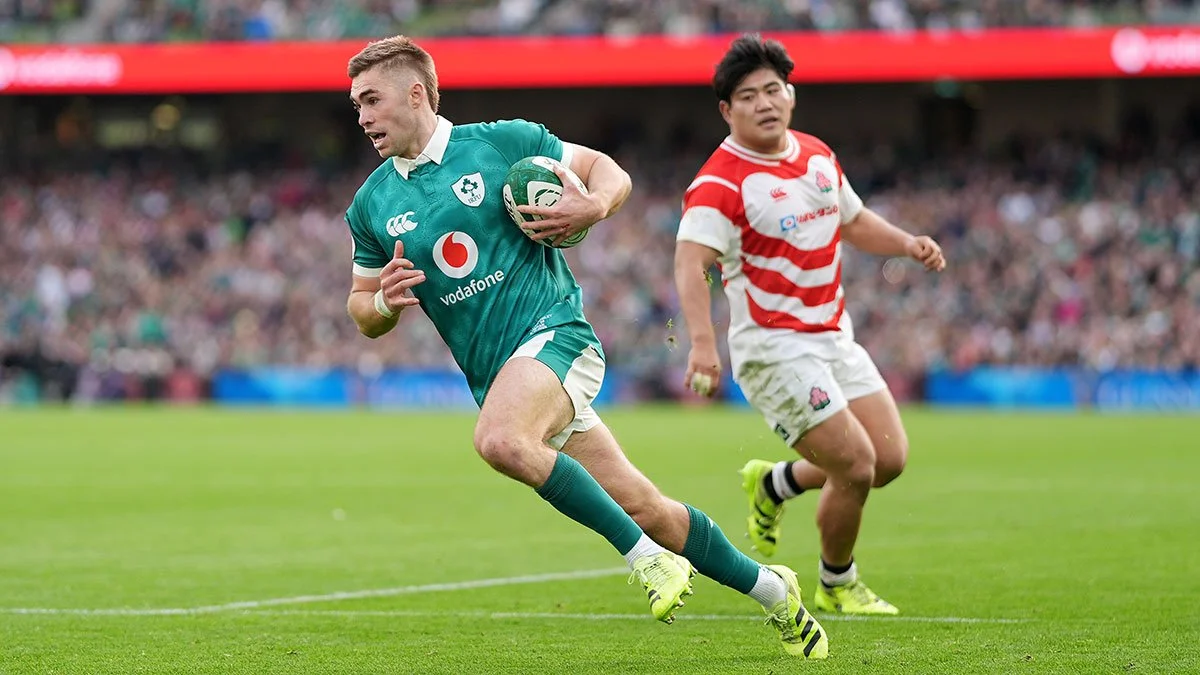
PHOTO CREDS: autumn-internationals.co.uk
Ireland would, however, bounce back with a resounding and dominant performance over the Wallabies, racking up 46 points to 19. In this match, everything seemed to click for Ireland right before their final fixture against South Africa.
A lot will be said about the refereeing performance by Matthew Carley (whose heavy influence on the game saw the brandishing of six cards, five of which went to Ireland), but there was no denying the dominance of the world champions over the hosts, especially at scrum time. James Ryan had his 20th-minute yellow card upgraded to a red after a shot on Malcolm Marx when attempting to clear the ruck. That was the beginning of what descended into a car crash of a game.
The sustained pressure at the scrum from the Boks saw both Irish looseheads, Andrew Porter and Paddy McCarthy, yellow-carded for infringements. Sam Prendergast was also yellow-carded for an accumulation of errors, whilst his fellow fly-half Jack Crowley was binned for a cynical foul at the ruck. The continued ill-discipline took Ireland to 12 men at one point, with the Boks’ bomb squad coming off the bench to further hammer the hosts, even forcing the concession of a penalty try just before the break.
So what should Ireland take away from this? Are they in crisis? Are the glory days behind this team? These questions have been brought up in Irish discourse following the end of the series. Ireland have gotten to a stage where fans expect them to challenge teams like New Zealand and South Africa, so to be beaten in the manners in which they were appears to be a step back.
A common criticism levelled at Farrell’s selection is the age profile of the squad. Across all four games, the average age of the selected squads was 29. This is a concerning statistic that Farrell must address, especially with the World Cup now less than two years away. Ideally, there would be a mix of youth and experience by the time of RWC 2027. The apprehensions lie in an over-reliance on veteran players who will be reaching retirement age by 2027. Depth wins tournaments, and a crop of younger, more athletic, and fitter players will be needed to support the experienced players. Injuries are another worry. Ireland fans may think back to the build-up to the 2023 World Cup where, if they had their way, Johnny Sexton would have been wrapped in bubble wrap in between games.
These fixtures also highlighted other key issues that Farrell will look to rectify. The set-pieces didn’t always fire; the line-out was very sloppy, averaging an 81% win rate across the whole series (71% average against South Africa and New Zealand), and against the Boks, the Irish scrum was reduced into penalty-generating paste (six penalties conceded from 16 Springbok scrums). This highlights a lack of raw power in the Irish pack. Bringing in younger, more athletic players will be crucial to creating the depth and long-term set-piece reliability needed to compete with larger, more physical teams.
Discipline is another issue that plagued Ireland’s campaign. The South Africa match is obviously the standout example of this and is indicative of the broader issue of Ireland struggling to maintain control when under pressure. Teams with a high work rate can disrupt Ireland’s momentum, which relies on fast ball in attack and cohesion in defence. This leads to fatigue, leading to errors and penalties that will cost teams games at test-level rugby. There is no easy fix for this. It is simply something players must acclimatise to mentally, as well as physically.
It is not all doom and gloom for Ireland though, and the belief that they are in crisis is unwarranted. Despite being reduced in numbers, Ireland held out against South Africa, particularly in the second half, where they managed to only concede three points from a penalty, whilst also slotting two penalties of their own from the boot of Crowley. There is no denying the character of this Irish team, who left everything out on the field against the world champions. They continued to fight until the final whistle, even when they were not able to win the game.
Ireland also led New Zealand for roughly an hour of the game before they began to fall off towards the end. Despite a sloppy performance, they still managed to put 41 past Japan and completely dominated the Wallabies. Sam Prendergast had a strong performance, particularly against Australia, and even managed a commendable 11 tackles against South Africa, only missing one — a big step up in terms of his defensive abilities and against a side renowned for their formidable ball carriers. Meanwhile, Jack Crowley had a solid series overall, which shall continue to fuel the debates over the 10 jersey, but Irish fans should rejoice in the luxury of having two young and talented fly-halves eager to play their best possible brand of rugby.
As for the age problem, yes, there is a crop of players that would probably make an all-time Irish XV that are getting older, but across all four provinces Ireland have a wealth of talent coming through; they just need opportunities. Below are just a small sample of some of the best talent from each province who haven’t got as many minutes with the national side.
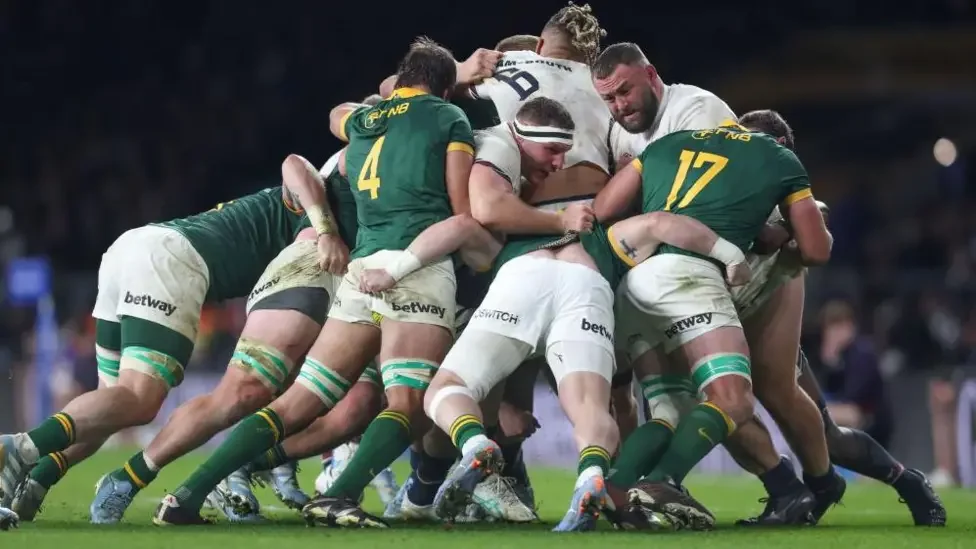
PHOTO CREDS: autumn-internationals.co.uk
Ulster:
Tom O’Toole – Prop
Tom Stewart – Hooker
James Hume – Centre
Michael Lowry – Fullback
Rob Baloucoune – Wing
Nathan Doak – Scrum Half
Cormac Izchukwu – Lock/Back Row
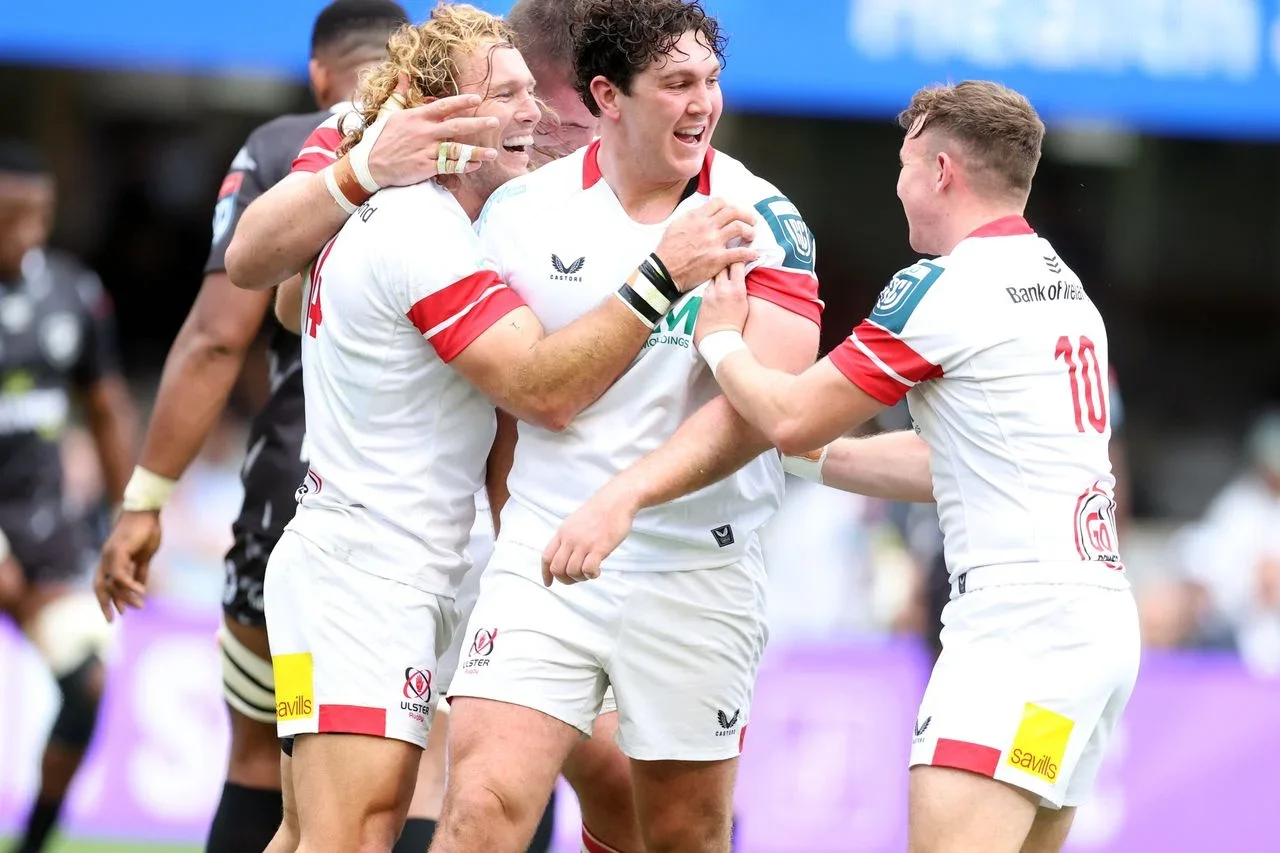
PHOTO CREDS: belfasttelegraoh.co.uk
Munster:
Thomas Ahern – Lock/Back Row
Gavin Coombes – Back Row
Ethan Coughlan – Scrum Half
Edwin Edogbo – Lock
Michael Milne – Prop
Brian Gleeson – Back Row
John Hodnett – Back Row
Alex Kendellen – Back Row
Connacht:
Hugh Gavin – Centre
Shayne Bolton – Wing
Darragh Murray – Lock
Niall Murray – Lock
Sean Jansen – Back Row
Leinster:
Fintan Gunne – Scrum Half
Alex Soraka – Back Row
James Culhane – Back Row
Hugh Cooney – Centre
Ciaran Frawley – Fly Half/Centre/Fullback
With the Six Nations, as well as the inaugural Nations Championship taking place next year, Farrell still has time to blood these players in time for the RWC 2027. The Irish system relies heavily on cohesion, so new players should be integrated gradually, perhaps being paired alongside more experience players when being given meaningful minutes.
It is important to keep in mind Ireland’s tendency to peak in between world cups. These fixtures have given insight into what Ireland must build towards. Instead of this being a downwards slope, perhaps what we are seeing is the next step in Ireland’s evolution.